
Buyer’s guide
Glass facades: which system for which part of the building?
A glass facade is a building envelope whose visible surface is glass, carried by aluminium profiles, either framed with visible lines or as one continuous surface. As a facade contractor with its own factory, Qusoor Al-Sultan builds both from SAR 470 to 780/m² supplied and installed, before VAT, and compares them here with cladding.
What is a glass facade?
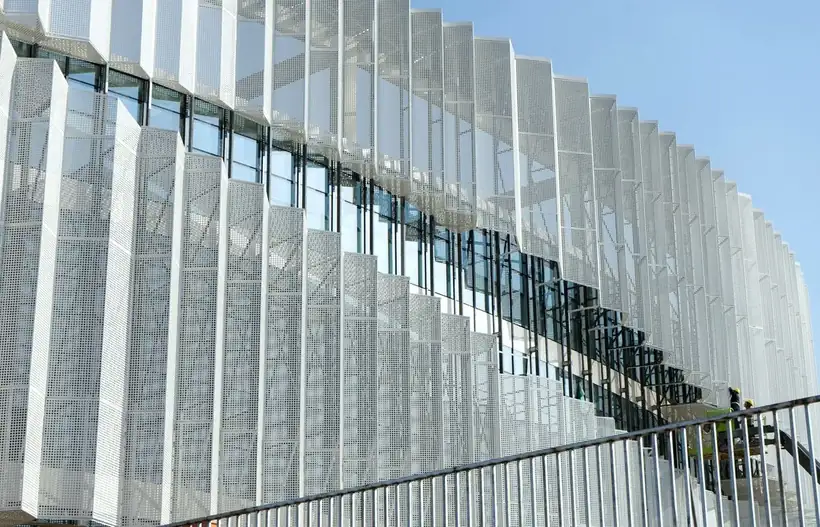
A glass facade, or glazed facade, is an outer envelope of glass panels held by an aluminium frame that hangs from the slabs or structure on brackets. It carries its own weight and the wind load on it, not the loads of the building, while gaskets and silicone keep water and air out. The best-known systems are curtain wall and structural glazing.
The Wikipedia article on facades describes a facade as generally the front or exterior of a building. In a glass facade the glass is that outer surface, not openings in a wall, so divisions and glass type are fixed before fabrication.
Which facade system suits each part of the building?
Curtain wall and structural glazing are glazing systems that carry glass; they differ only in showing or hiding the frame. Cladding is not glazing at all but a skin for solid wall, covering the opaque facade areas. So the useful question is not which system is best, but what each part of the elevation needs: daylight and a view, or a durable solid finish.
| Aspect | Curtain wall | Structural glazing | Cladding |
|---|---|---|---|
| Look | Visible profile lines | Continuous glass, no visible frames | Solid panels |
| Typical use | Offices and towers | Modern villas and showrooms | Shopfronts and commercial buildings |
| Rate per m² | SAR 470–780 | SAR 470–780 | SAR 180–286 |
| Grades or materials | Smart 470–585, SG 50 530–630 (Alupco) | Same as curtain wall | ACP 180, special colours or wood look 250, laser-cut 235 |
| Fixing | Pressure plate and outer cap | Structural silicone from inside | Panels on a sub-frame; aluminium sub-frame +SAR 36/m² |
| Glass | Single tempered included; double +27, laminated double +200, reflective +36 | Same options | None |
Each system in depth: curtain wall, structural glazing and aluminium cladding; every published rate is in the aluminium and glass price guide.
Aluminium and glass facades for offices, residential villas and shops
- Offices and towers: curtain wall, a hung system suited to tall elevations.
- Villas and homes: a residential glass facade is usually structural glazing, or large aluminium windows from SAR 325/m² on a tighter budget.
- Shops and showrooms: shop front glass at ground level, with cladding for solid parts.
Which glass suits a facade: tempered, laminated, double glazed or reflective?
No single glass suits every facade; the choice follows orientation and building use. Single tempered glass is the base price, double glazing cuts heat gain for SAR 27/m² more, laminated double glazing adds safety for SAR 200/m², reflective tinted glass suits sun-facing elevations for SAR 36/m², and Low-E glass is supplied on request. In practice, a toughened glass facade starts from the single tempered base, a mirror or coloured glass facade uses the reflective tinted glass, which looks like a mirror from outside by day, and a double glazed facade uses insulating units. On a spandrel glass facade, the bands in front of floor slabs and ceiling voids take opaque glass instead of clear vision glass, so the structure stays hidden while the elevation still reads as glass.
| Glass | What it does | Where it suits | Added per m² |
|---|---|---|---|
| Single tempered (toughened) | Safety glass that breaks into small granules instead of sharp shards | Most elevations; it is the base of every grade | Included |
| Double glazed (28 or 33 mm unit) | Two panes around a sealed gap that cuts heat transfer | Sun-facing facades and buildings cooled all day | SAR 27, within the grade band |
| Laminated double (1.52+6+6) | A PVB interlayer holds the panes together if they break | Entrances, walkways and tall facades with safety requirements | SAR 200, on top of the grade |
| Reflective coloured (tinted) | Reflects part of the solar heat and looks like a mirror from outside by day; it does not block the view at night | Glass in direct sun for most of the day | SAR 36, within the grade band |
| Low-E | A thin coating that cuts heat transfer | Sun-exposed facades | Supplied on request, priced by quote |
What are the drawbacks of glass facades?
There are four, and each has a known answer settled on the drawings: solar heat, met with double, reflective or Low-E glass or external shading; night-time exposure when the interior is lit, met with frosted bands or screens; joints that need periodic checks; and cost, met by cladding the solid areas from SAR 180/m².
External shading is the job of fixed louvers and sun breakers, from SAR 380/m² supplied and installed, before VAT.
How is a glass facade installed?
Installation starts on the drawings, not on site: openings and panel divisions are fixed before fabrication and cannot be added afterwards. A facade then passes through five stages, from drawing review to sealing the last joint, with a mock-up added only where the project specification calls for one to be tested first.
- Drawing review — divisions, openings, junctions and glass.
- Shop drawings and material take-off — by our technical office.
- Mock-up where required — agreed at the start.
- Fabrication — at our factory in Makkah.
- Installation — brackets, then profiles and glass or complete units, with sealed joints.
What should you expect from facade contractors and aluminium facade companies in Saudi Arabia?
A facade contractor needs a technical office, because the scope runs from drawing review and shop drawings to installation, priced against a bill of quantities with deliveries scheduled to the programme. A workshop suits single items and small quantities. Among aluminium facade companies in Saudi Arabia, Qusoor Al-Sultan is both glass facade manufacturer and installer, producing the system at its own factory in Makkah and taking the full scope of facade aluminium and glazing work, directly with owners or as a subcontractor under the main contractor.
Frequently asked questions
When should I choose a curtain wall?
When the facade is tall and needs a hung aluminium and glass system in front of the structure, and visible profile lines are acceptable. It is the usual choice for office buildings and towers.
When should I choose structural glazing?
When you want a continuous glass surface with no visible frames, the most requested look on modern villas and showrooms. It needs a closer review of the facade divisions and of how the panels are fixed to the structure.
When should I choose cladding?
When a solid part of the facade needs a skin rather than glazing. It is the least expensive of the three, from SAR 180/m² against SAR 470/m² for the glazing systems, and is used most on shopfronts and commercial buildings.
Can one project combine more than one facade system?
Yes, and it is common: a curtain wall for the main elevation with cladding for the solid areas. What matters is that the limits of each system and the transition between them are clear on the drawings before pricing.
Which is more expensive: curtain wall, structural glazing or cladding?
Curtain wall and structural glazing cost the same, SAR 470 to 780/m² supplied and installed before VAT in Makkah, while cladding runs SAR 180 to 286/m²; outside Makkah, transport and installation add 3% to 10%. Price is not the only difference: cladding covers solid wall, the other two carry glass.
Can a glass facade be openable?
Yes, in parts. Curtain wall and structural glazing take built-in tilting windows at SAR 315 each and doors at SAR 990 each, placed on the drawing before fabrication. A front that must open across its whole width is not a hung facade: it is built with sliding doors, or frameless folding glass where almost all of it opens, as on shopfronts.
How much does a glass facade cost per m² in Saudi Arabia?
Glass facades, built as a curtain wall or structural glazing, cost SAR 470–780/m² supplied and installed in Makkah, before 15% VAT. Single tempered glass is included: Smart runs 470–585 and SG 50 530–630, with double or reflective glass inside those bands, while laminated double glass and built-in windows or doors are priced on top. Other cities add 3% to 10%.
Does a glass facade suit a house or villa?
Yes. Structural glazing is the most requested on modern villas for its continuous glass surface, from SAR 470/m², and a simpler option for villas and majlis rooms is a facade of aluminium window openings from SAR 325/m². Either way, night-time privacy is settled before fabrication.
Technical review: Eng. Hisham, factory manager at Qusoor Al-Sultan, with more than 20 years of management and technical experience in aluminium and glass. He reviews the technical content of this page. Last updated: 8 October 2026.